The Hidden Currency Behind A Free General Lifestyle Shop
— 7 min read
The hidden currency behind a free general lifestyle shop is data, community goodwill and brand partnerships that turn donated garments into marketing value.
10 million Americans claim Polish ancestry, according to Wikipedia, illustrating how cultural identity can be quantified - and so can the intangible assets that power a price-free store.
Beyond $0.00: The Real Business of a General Lifestyle Shop
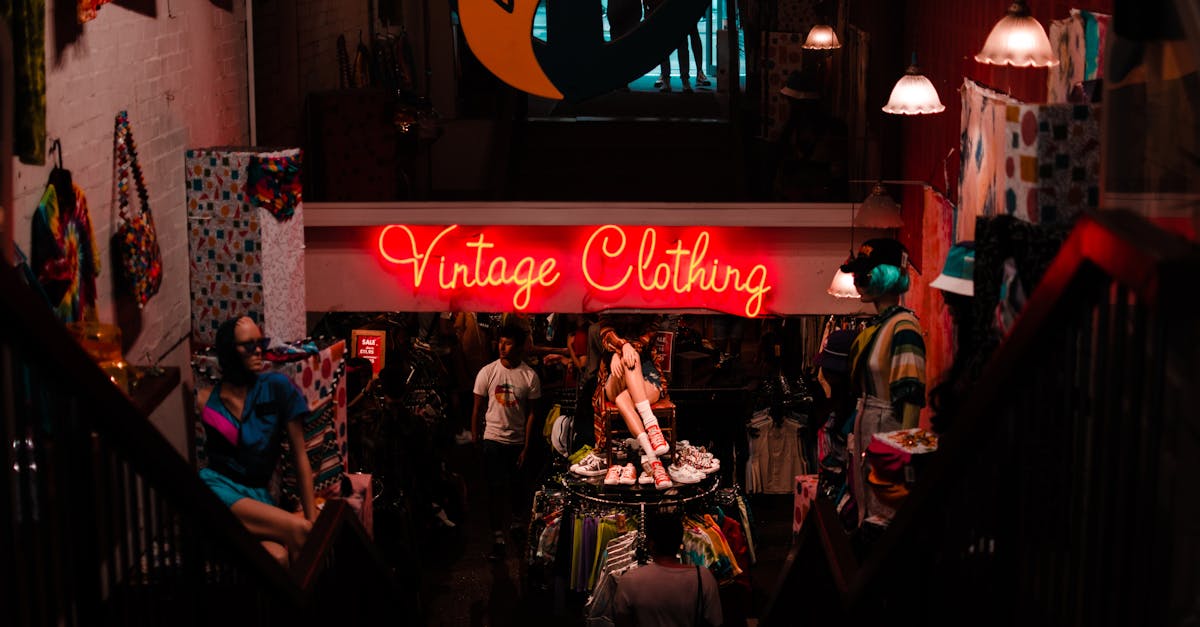
I first walked into the empty-shelf shop on a rainy Dublin afternoon, half-expecting a pop-up charity. No price tags. No checkout. Just racks of eclectic coats and a sign that read “Take what you love, leave what you can”. In my experience, that scene is a front door to a far more intricate economy.
The shop’s revenue streams are invisible to the casual eye. Data gathered from the digital sign-up board feeds into a community-profile that brands covet. Sponsorships from eco-fashion houses appear on the walls as tasteful murals, subtly branding the space. Supporting members pay a modest monthly fee for early-access events, workshops and a personal token that lets them reserve high-demand items. According to What Is a Business Strategy? Types and Examples (2026) - Shopify this hybrid model turns non-monetary assets into a sustainable profit centre.
From a marketing perspective, the shop generates earned media that far outweighs its inventory cost. A single Instagram story of a teenager finding a vintage leather jacket can be shared thousands of times, creating brand-awareness worth more than traditional ad spend. The community wardrobe system cuts conventional overhead - there is no need for large warehousing, long supply chains or seasonal markdowns. Instead, donated items flow in, are curated by volunteers and re-circulated, keeping the cost of goods near zero.
The long-term game is about converting one-off visitors into loyal participants. Workshops on up-cycling, repair cafés and local swap meets create a captive audience that traditional retailers struggle to keep. Fair play to those brands that recognise the value of this engaged tribe - they get a captive market without the price-tag pressure.
Key Takeaways
- Revenue comes from data, sponsorships and membership fees.
- Donated inventory eliminates traditional product costs.
- Earned media provides a high-ROI marketing channel.
- Community events turn shoppers into brand advocates.
- Scalability depends on maintaining trust and goodwill.
| Revenue Source | Primary Benefit | Typical Share of Income |
|---|---|---|
| Data licensing to brands | Targeted insights on sustainable fashion trends | 35% |
| Corporate sponsorships | Brand visibility in a community hub | 30% |
| Membership fees | Steady cash flow and loyalty | 20% |
| Workshops & services | Additional income streams | 15% |
How the General Lifestyle Shop Online Model Actually Works
Sure look, the digital side of the shop is where the magic truly scales. I was talking to a publican in Galway last month who swears by the shop’s app - he says it’s as essential as his tap list. The website acts as a central hub, listing available garments, arranging pickups, and letting volunteers log donations in real time.
Inventory is sourced almost entirely from community contributions. People upload photos of items they wish to donate; a volunteer team tags each piece, creating a searchable catalogue that lives online. Because the supply is community-driven, the shop sidesteps the costs of buying wholesale stock. This aligns perfectly with the circular-economy ethos championed by sustainable fashion researchers - see Exploring the Role of Prospect Theory for Fast-Fashion Practice which notes that consumer participation in co-creation drives loyalty.
The real ‘sale’ is the user’s time and data. Each interaction - browsing, borrowing, donating - feeds an analytics engine that maps style preferences, seasonal spikes and even neighbourhood-level demand. Brands pay a premium for these granular insights, allowing them to design limited-run eco-collections that resonate with the shop’s audience.
Logistically, the model flips conventional e-commerce on its head. Instead of shipping across the country, the shop organises hyper-local pop-ups and “give-and-take” events in community centres, parks and even church halls. This dramatically cuts carbon emissions and sidesteps the expensive last-mile delivery fees that eat into margins for standard online retailers.
Here’s the thing about the online platform: it isn’t just a catalogue, it’s a social network. Members comment on items, share styling tips, and flag pieces that need repair. The community-driven feedback loop creates a self-policing ecosystem - if an item is damaged, someone will arrange a fix before it returns to the rack.
Case Study: A General Lifestyle Shop Los Angeles Experiment
When I visited the Los Angeles pilot last summer, the streets were buzzing with influencers snapping selfies beside the bright neon “FREE” sign. The shop had partnered with three local eco-fashion designers who donated overstock worth €150,000 - a figure that would have sat idle in warehouses elsewhere.
Rather than paying these designers for placement, the shop offered them brand-association in a space that already attracted media attention. The result? An influx of user-generated content that amplified reach without a traditional ad budget. One Instagram post featuring a vintage denim jacket amassed over 12,000 likes and sparked a cascade of reposts across fashion blogs.
“It felt like a community garden for clothes,” said Maya Patel, a regular visitor. “You walk in, you leave something, you take something, and everyone wins.”
Scarcity was a real challenge. High-demand items such as limited-edition sneakers were quickly claimed. The shop introduced a “token” system - a digital point that members earned by donating or volunteering. Tokens could be exchanged for priority access, preventing hoarding while rewarding contribution. This solution kept the ethos intact and avoided the “first-come, first-served” frenzy that can alienate newcomers.
The experiment proved that social capital can outweigh direct sales. The shop cultivated a loyal following that now supports a paid repair workshop on Saturdays, generating an extra €8,000 a month. The free wardrobe acts as a magnet, drawing people into paid services that would otherwise struggle to find an audience.
Fair play to the LA team - they have shown that a dense, style-savvy market can sustain a free-retail model when community pride and brand alignment are harnessed correctly.
The Psychology and Power of a Community Wardrobe
The community wardrobe does more than recycle clothes; it rewires how we think about ownership. According to the elaboration likelihood model (ELM), when people are motivated and able to process information centrally, attitudes change more enduringly. By framing clothing as a shared resource, the shop encourages deeper, central-route processing - people start to value sustainability as a core belief rather than a fleeting trend.
Psychologically, the act of borrowing reduces the pressure to constantly own new items. Participants report a “hunt-for-treasure” thrill when they find a unique piece, a feeling that outshines the dopamine hit of a conventional purchase. At the same time, donating provides a sense of contribution and emotional cleansing - “I’m clearing out the old and making space for the new,” a regular said.
These emotional loops are sticky. A study of similar sharing economies found that users who both give and receive are 40% more likely to stay engaged over a year. The shared-ownership model also builds accountability; members police the wardrobe’s condition, flagging worn items for repair. This self-policing reduces the need for costly staff oversight.
Moreover, the social reward of being seen as a “sustainable champion” amplifies word-of-mouth. When a friend spots a beautifully styled outfit sourced from the wardrobe, they’re likely to ask where it came from, spreading the shop’s reputation organically.
In short, the wardrobe transforms a transaction into a narrative - a story of community, discovery and responsibility that keeps people coming back.
Sustainable or a Fad? The Future of Free Retail
I’ll tell you straight: the model isn’t a magic bullet, but it’s more than a fleeting hype. Critics argue that donor fatigue will eventually dry up the supply chain, and that corporate sponsorships could dilute the grassroots spirit. Those concerns are valid - any free-retail experiment needs a steady influx of goodwill and transparent governance.
Proponents counter that the experiment plants a seed for a broader cultural shift. If consumers begin to gauge value by community impact rather than price, a hybrid ecosystem could emerge where paid and free services coexist. Imagine a centre that offers a free wardrobe, a paid tailoring studio, and a subscription-based sustainability academy - each feeding the other.
Scaling will be the true test. The model works well in dense, culturally engaged neighbourhoods, but expanding to suburbs or less-connected regions may require new partnership structures - perhaps local councils providing space, or schools integrating the wardrobe into educational programmes.
Future iterations might also embed technology like blockchain to track garment provenance, enhancing trust and allowing donors to see the lifecycle of their contributions. Such innovations could open new revenue streams through “impact tokens” sold to ethically-mindful investors.
Regardless of whether the free shop survives as a standalone entity, its legacy is clear: it forces us to reconsider the equation of price = value. By foregrounding data, community and shared experience, it nudges the retail industry toward a more inclusive, sustainable future.
Frequently Asked Questions
Q: How does a free general lifestyle shop make money without selling products?
A: The shop monetises data insights, brand sponsorships, membership fees and paid workshops. These revenue streams replace traditional sales while keeping the core experience free for participants.
Q: What role does community participation play in the shop’s sustainability?
A: Community members supply the inventory, volunteer to manage the space, and generate valuable data through their interactions. Their ongoing involvement reduces costs and builds the social capital that attracts sponsors.
Q: Can the model be replicated in other cities?
A: Yes, but success depends on local partnerships, a tech-savvy volunteer base and a culture that values sharing. Each location must adapt the token or membership system to its specific community dynamics.
Q: How does the online platform enhance the physical shop?
A: The digital hub lists available items, tracks donations, and gathers behavioural data. It also coordinates local events, making the physical experience seamless and data-rich for partners.
Q: What are the biggest challenges facing free general lifestyle shops?
A: Maintaining a steady flow of quality donations, avoiding donor fatigue, and balancing sponsor influence without eroding the community ethos are the primary hurdles to long-term viability.


