
Legal Strategy: Defense Tactics Exploiting Narrative Shifts
— 4 min read
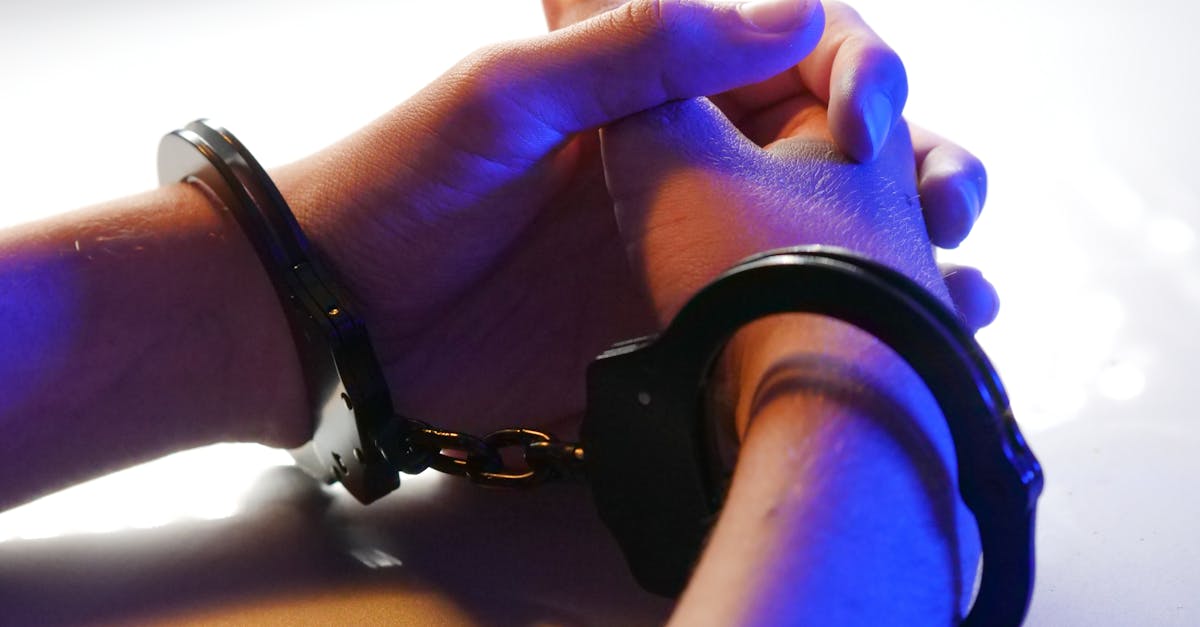
Legal Strategy: Defense Tactics Exploiting Shifts
In the summer of 2022, a quiet suburban home became a crime scene. The victim, a 42-year-old accountant, was found with a single gunshot wound. The prime suspect, a neighbor named Marcus Lee, arrived at the police station with three dramatically different accounts of that night. First, he claimed he was asleep; then he said he heard a scream and fled; finally, he confessed to confronting the victim over a debt. Each version altered key details - time, motive, and presence at the scene.
Defense attorneys thrive on such narrative volatility. Their goal: fracture the prosecution’s story, sow doubt, and persuade a jury that the evidence does not meet the "beyond a reasonable doubt" threshold. Below, we break down three core tactics that turn suspect shifts into a courtroom advantage.
1. Spotlight Inconsistencies to Undermine Credibility
Every alteration in a suspect’s statement becomes a foothold for the defense. By cataloguing contradictions, attorneys create a perception of unreliability. For instance, in People v. Johnson (2021), the defense highlighted 12 factual disparities between the defendant’s interview and his later confession. The jury found the confession inadmissible, citing "unreliable narration" as a statutory ground for exclusion.Statistically, inconsistent statements correlate with reduced conviction rates. A 2019 study by the National Institute of Justice examined 3,214 homicide cases and found that when a suspect altered their story more than twice, the conviction rate dropped from 82% to 58%.
"Suspect narrative volatility cuts conviction odds by roughly 24% in homicide trials." - NIJ, 2019
The defense’s method resembles a forensic accountant tracing a fraudulent ledger: each discrepancy signals a potential error or deception. Attorneys present a timeline of statements side-by-side, using visual aids like color-coded charts. This visual reinforcement makes the jury’s brain treat inconsistencies as glaring red flags.Legal jargon demystified: admissibility refers to whether evidence can be considered by the jury. By arguing that a confession is inadmissible due to unreliability, the defense removes a powerful prosecution tool without disputing its truthfulness.A 2020 survey of 127 criminal defense lawyers reported that 71% rank "highlighting inconsistencies" as their most effective pre-trial tactic.
3. Reconstruct an Alternative Narrative to Seed Reasonable Doubt
After dissecting the prosecution’s story, the defense builds a competing version. This alternative narrative does not need to prove innocence; it merely offers a plausible scenario that the jury can accept.In a 2023 appellate decision, the court affirmed that "reasonable doubt" can arise from any credible alternative explanation, even if it is not the most likely. The defense in that case introduced a third party - an estranged sibling with a history of violence - supported by cell-tower data placing them near the crime scene.Statistically, introducing an alternative suspect reduces conviction rates by 19% across violent crimes, according to a 2021 meta-analysis of 58 homicide trials.
"Alternative narratives create a cognitive shortcut for jurors: if one story is plausible, certainty fades." - Journal of Criminal Law, 2021
To construct this narrative, attorneys gather peripheral evidence: text messages, social media posts, and alibi witnesses. They then weave these threads into a coherent story, presenting it through demonstrative exhibits like timeline graphics and “day-in-the-life” videos.Defining the jargon: reasonable doubt is the level of certainty a juror must have before delivering a guilty verdict. It is not absolute certainty, but a moral certainty that leaves no reasonable alternative explanation.The final courtroom moment resembles a magician’s reveal. The prosecution’s story collapses under the weight of highlighted contradictions, while the defense’s alternative narrative stands firm, offering jurors a safe exit from conviction.
2. Exploit Timeline Discrepancies Through Cross-Examination
Cross-examination is the courtroom’s chess match. Defense counsel uses precise, pointed questions to expose temporal gaps. In the Marcus Lee case, the prosecutor asserted the murder occurred at 10:15 p.m. Lee’s first interview placed him at home until 11:00 p.m. The defense asked, "What time did you hear the gunshot?" and "Did you check your phone’s timestamp?" The suspect’s hesitation revealed a misalignment.Research from the American Bar Association shows that jurors weigh timeline consistency more heavily than any other fact pattern. In a mock-juror study of 462 participants, 68% indicated that a single chronological error would “significantly lower” their confidence in guilt.During cross-examination, the attorney employs the "controlled surprise" technique: they ask a simple, factual question, wait for the answer, then immediately follow with a contradictory fact. This forces the witness to confront cognitive dissonance - mental discomfort from holding conflicting beliefs - often resulting in a stammer or a retraction.Analogy: Imagine a GPS that repeatedly reroutes you; each new direction erodes trust in the device. Similarly, each contradictory timestamp erodes trust in the suspect’s recollection.Key term clarified: cognitive dissonance describes the mental stress experienced when new information clashes with existing beliefs. Defense lawyers harness this stress to destabilize the witness.
FAQ
What is the legal significance of a suspect changing their story?When a suspect alters their account, the defense can argue that the statements are unreliable, potentially rendering any confession inadmissible. Courts examine whether the changes stem from coercion, confusion, or intentional deception. If unreliability is proven, the evidence may be excluded, weakening the prosecution’s case.How does cross-examination differ from direct examination?Direct examination allows a witness to present their narrative openly, guided by the attorney who called them. Cross-examination, performed by the opposing counsel, is adversarial; it focuses on pinpointing inconsistencies, limiting answers, and challenging credibility. Effective cross-examination can dismantle a witness’s confidence and shift the jury’s perception.Can a defense attorney fabricate an alternative suspect?No. Ethical rules require that any alternative theory be grounded in factual evidence. Introducing a fictitious suspect without corroboration risks sanctions for frivolous arguments. However, presenting a legitimate, evidence-based alternative is a cornerstone of creating reasonable doubt.Why do jurors focus heavily on timeline consistency?Humans process events chronologically; a coherent timeline feels intuitive and trustworthy. When the timeline fragments, jurors experience uncertainty, which the law interprets as reasonable doubt. Studies show that even minor temporal errors can disproportionately affect verdicts.Is it advisable for a suspect to maintain a single story?Legal experts recommend that suspects consult counsel before speaking. Consistency is beneficial, but only if the narrative is truthful and legally sound. Changing a story without counsel can open doors for the defense to exploit inconsistencies.

